Hakarl: An Icelandic Recipe For Shark Meat

Hakarl: An Icelandic Recipe For Shark Meat


July 18, 2025 | Matthew Burke

Hakarl: An Icelandic Recipe For Shark Meat


Hakarl, a traditional Icelandic dish, offers a unique gastronomic experience with its fermented shark meat. Though it can seem daunting, creating Hakarl is actually very easy and just requires only a few simple steps.
1709792444991Wikimedia Commons

How to make Hakarl

First, you must get a shark, preferably a Greenland or sleeper shark, as they have a high urea content that is perfect for this recipe. After obtaining the shark, carefully remove the skin and bones, reserving the flesh to serve as the main ingredient for the Hakarl.

The fermentation process must be started after the shark meat has been prepared. Make a shallow hole in the gravelly sand along the coast, place the meat inside, and let it ferment for many weeks. After that, naturally occurring enzymes and bacteria in the sand will do their magic and transform the meat.
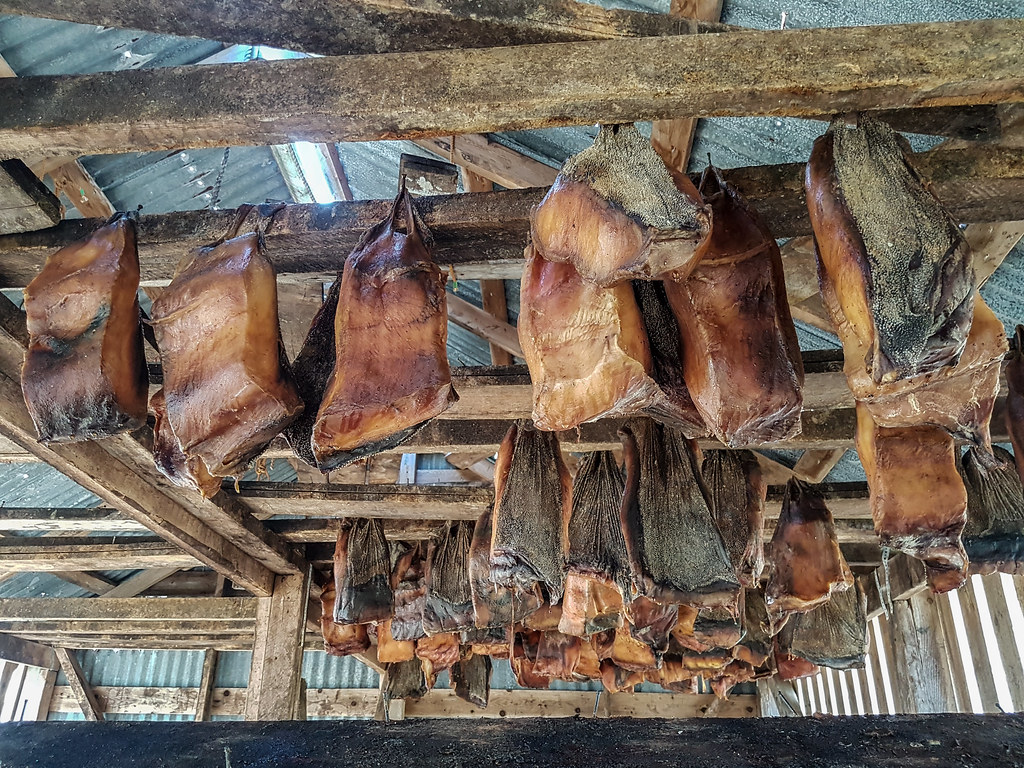
1709792496759Richard Troller | Flickr

Advertisement

Once it's ready

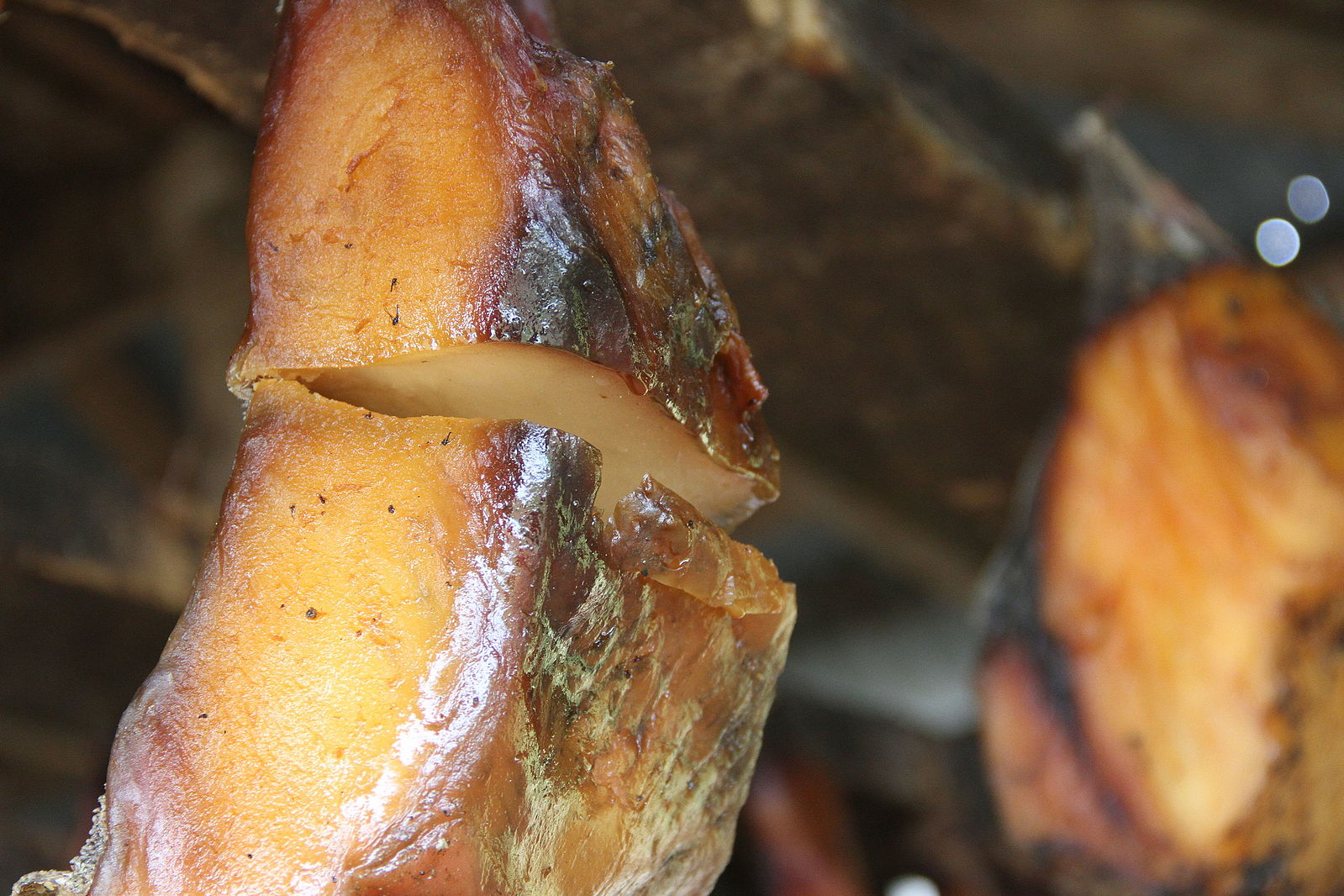
After the shark meat has fermented, take it out of the sand and allow it to dry for many months in a well-ventilated area. The meat will taste and feel better after this drying stage, which gives it a distinct umami flavor and a solid but tender texture.

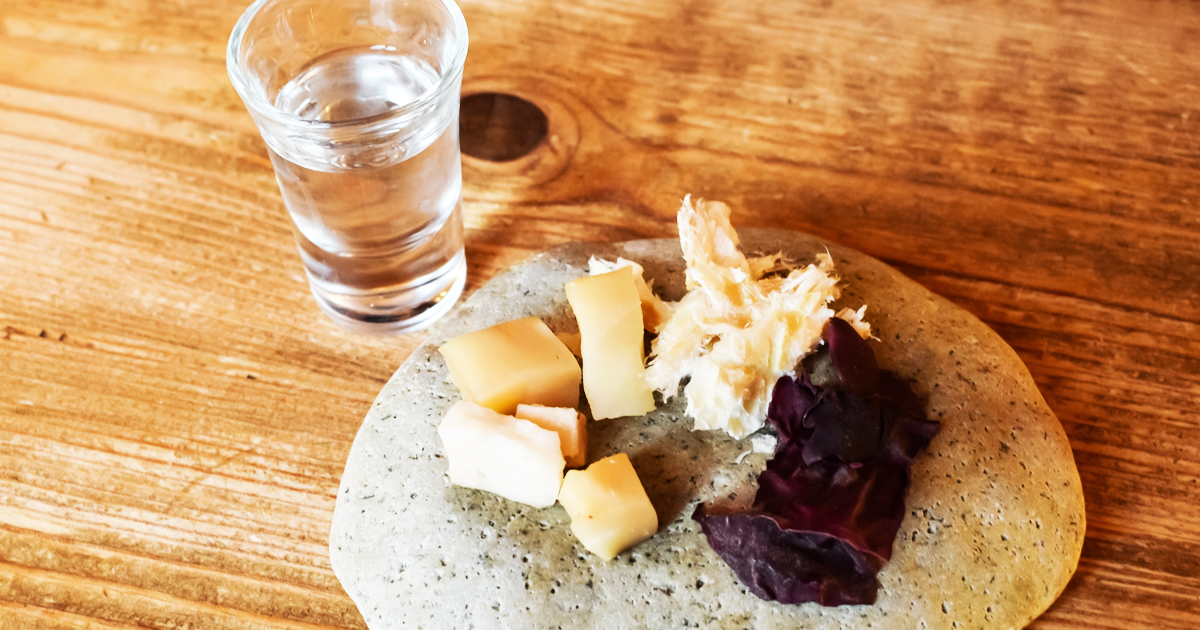
Hakarl is often served in bite-sized portions after it has been cooked for consumption. Serve it with hearty rye bread and traditional Icelandic condiments such as Brennivín (a schnapps laced with caraway) to bring out the bold tastes of the meat.
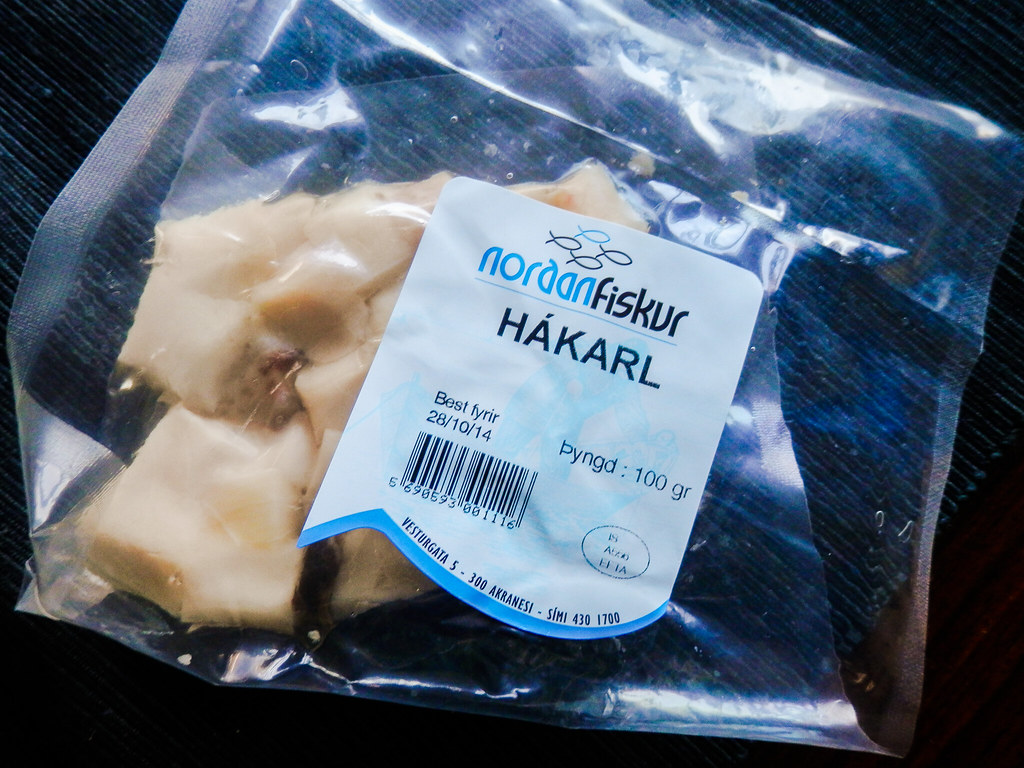
1709792530140Jerrick Parrone | Flickr

Advertisement

It's an acquired taste

It's important to approach every bite of Hakarl with an adventurous mindset and an open mind to truly enjoy it. Though it smells strong at first, like ammonia or harsh cheese, if you keep taking bites, you'll discover its complex, multidimensional flavors.


READ MORE

Woman is cooking in home kitchen. Female hands cut salami, vegetables, greens, tomatoes on table on wooden boards. Ingredients for preparing italian or french food. Lifestyle moment.
July 31, 2026 | Samantha Henman

The Surprising “Secret” Ingredients Home Chefs Reach For

Every good home chef has a few tricks up their sleeve when it comes to cooking. And that includes some seriously surprising “secret” ingredients that they add to their signature dishes.
Malagasy Internal
July 31, 2026 | Sammy Tran

Malagasy Cuisine: A Fusion Of African, Asian, And European Flavors

Malagasy cuisine, originating from Madagascar, is a diverse fusion of flavors from Africa, Asia, and Europe. It has taken bits and pieces from each continental influence, and over the years evolved into its own unique food culture.
Taste Internal
July 31, 2026 | Alex Summers

How To Develop A Good Palate And Develop Your Taste Buds

Developing and maturing your taste buds is not a practice that only food critics and experts in the culinary field do—anyone can enhance their palate through practice and awareness.
July 30, 2026 | Jesse Singer

The Most Influential Celebrity Chefs

The proliferation of foodieism has made the celebrity chef a phenomenon of our pop culture landscape. From Julia Child to Anthony Bourdain—these are the most influential celebrity chefs, past and present.
July 30, 2026 | Jane O'Shea

Choosing The Best Eggs: The Balance Between Price And Nutrition

With labels promising everything from “cage-free” to “omega-3 enriched” to “pasture-raised", it's important to know how to choose the right eggs for your health and budget.
July 30, 2026 | Miles Brucker

Rescuing Your Food From Blandness Purgatory: Easy Ways to Add Depth to Your Dishes

If your home-cooked dishes are stuck in the limbo of chronic blandness, a few basic strategies and pantry staples can add richness and flavor to every bite.